SURPRISE AND WONDER

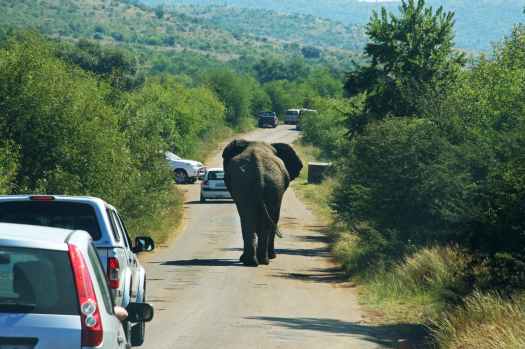
photography of elephant on road
Photo by Magda Ehlers on Pexels.com

In the late evening of January 2nd, some years ago, I was driving a rental car to Tampa, Florida, from which my family and I were scheduled to take a flight home the next morning.  We were traveling on a barren stretch of road between U.S. 41 and Interstate 75 near Bonita Springs, a city on the southwest coast of Florida. Up ahead we saw the flashing lights of what appeared to be a police car. At first, we thought that there must have been an accident or that someone had been pulled over for a traffic violation.  We slowed down a bit but kept moving forward. When we got closer we saw two police vehicles, with lights flashing, blocking our lane of traffic and a pickup truck, also with lights flashing, moving towards us in the opposite direction.

The pickup truck pulled up beside us and the driver rolled down his window and said straightforwardly to me, “Turn on your flashing lights and pull over, we’ve got a couple of elephants coming through.” Although puzzled by the meaning of his words, I did as he asked and stopped the car, turned on the flashing lights, and waited to see just what he was talking about. We all peered through the front window of the car trying to see what was ahead of us. Out of the darkness of the night emerged a long string of elephants. The elephants—we counted 13 to 14 of them— were linked, trunks to tail in one long and impressive procession. Handlers walked alongside the elephants guiding them in a straight line with the ropes attached to them. We could not believe what we were seeing.

I rolled down the window on the driver’s side to get a better look. One of the elephants, perhaps hearing the noise of my car engine or perhaps scared by me and the others in the car peering at him/her lifted up his front foot, and made a loud noise—the kind that elephants make— and moved towards our rental car. The handler pulled on the ropes to calm the elephant down. I, for my part, quickly rolled up the window.

The elephants were followed by 20 of more zebras, one mule, and then 20 to 30 horses.   In no time the animals and handlers passed us by and I drove off wondering what in the world had just happened.

We quickly began to talk amongst ourselves, telling and retelling the story of what had just happened. We wondered aloud just how we might have explained it to our auto rental company if that disturbed elephant had stepped on top of our car.  Realizing the utter absurdity of the story, and the likelihood that we would all be judged quite insane had something like that actually happened, we laughed with utter joy and frivolity.

The most remarkable thing about this experience was that it was completely unexpected.  Nothing we had done that day could have prepared us for this event. It came as a complete surprise.

I’m sure that the earliest followers of Jesus must have sounded crazy to others when they claimed that they had found the Messiah, or when they later claimed that this Messiah, who had been crucified by the Romans, had been raised by God from the dead.

Although others may have thought that these followers of Jesus had gone off the deep end, those surprised by God’s glorious and unexpected actions, I’m sure, experienced a complete and utter joy when they told others about what they had seen and heard.

In the season of Epiphany, we tell and retell the stories of the manifestation of God’s goodness and love to the nations, particularly in the person of Jesus Christ.

These epiphanies of God’s grace and goodness, however, are not limited to the past. God’s mercy and goodness are new every day. Pay attention this season to the ways in which God moves in your life. Take time to share with others the joy and wonder of those unexpected moments in which you, perhaps for a moment, become aware of God’s grace in your life.

THE LIGHT OF LIGHT, THE LIGHT OF LIFE — A CHRISTMAS MEDITATION

The canonical gospels tell the Christmas story in two different ways. The one more familiar to us is that of the birth of Jesus in Bethlehem in Judea as told in the gospels of Matthew and Luke.  (The gospel of Mark doesn’t tell this story at all.) The second is the one told in the gospel of John. Here we find the story of how Jesus, the word of God, became fully incarnate in human flesh. It is the story of how God entered into the world in splendid light. The writer of the gospel of John writes of Jesus, “in him was life, and the life was the light of all people. The light shines in the darkness, and the darkness did not overcome it”(John 1:4-5).

Later in the same gospel, Jesus says, “As long as I am in the world, I am the light of the world”(John 9:5). And, “I am the light of the world. Whoever follows me will never walk in darkness but will have the light of life” (John 8:12). Jesus is the light of the world. He is “God from God” and “Light from Light” as we affirm in the Nicene Creed.

The central Christmas message is that God became incarnate in Jesus. That is true whether it is told as the narrative of the birth of a child as in Matthew and Luke or in a more symbolic way as in John.

In the worship services of the Episcopal Church we read and tell the story of the birth of Jesus in Bethlehem at our Christmas Eve and Christmas Day services. We read and tell the story of Jesus, as the light that enters a darkened world, being born in human flesh, on the first Sunday after Christmas. Both stories are read and proclaimed during the twelve days of the Christmas season.

We find many references to light and darkness in the gospel of John. In the first chapter of John, Jesus, the light of the world, enters a world full of darkness. The darkness now threatened by that brightness of that light is not able to overcome the power of that light, a light that comes from the very being of God (John 1: 4-5).

We can understand the darkness of the world in two ways —the first, in historical, political and social terms, and the second, in personal terms.

That world is a place full of darkness. Darkness is a metaphor for human sin, greed, corruption, and all of the things that are not in accord with the purposes for which God created them. [1]  We see the darkness of the world in crime and lawlessness. We see it in political institutions and governments. We see it in social inequality and injustice.

We also find darkness within our own selves. We see it in the sinful and self-indulgent appetites that make ourselves the center of the universe, often to the detriment of others. We see it in our quickness to find fault with others without realizing that those same faults are found in us. We see it in the dishonesty of the little things in daily life that we just let slide, saying that it is someone else’s problem and not ours. We see it in the lack of concern for the welfare of others. And we see it in our failure to love our neighbors as we love ourselves.

At the same time, we find this darkness even deeper within us, in our loneliness and lack of hope. The world can be a dark and hopeless place. Sometimes, we are just a breath or two away from despair.  That is when we need to hear the good news of Christmas most of all. “Do not be afraid; for see—I am bringing you good news of great joy for all the people: to you is born this day in the city of David a Savior, who is the Messiah, the Lord” (Luke 2:10-11).

When hope is thin and frail, Jesus comes to us in our own dark night. He comes into the world to be near to us, to bring light into our darkness — to console us, and to save us. He comes to us in our weakness and our frailty, to enlighten the darkness within us, to bring hope. And when he comes, he brings light and peace that all may be well.

With the Mary and Joseph, the humble shepherds, and the heavenly host of angels let us give thanks to God for the gift God has given us at Christmas, the gift of God’s own self, in the person of Jesus. Gloria in excelsis Deo.

Footnotes

[1]‘Light’ and ‘dark’ are guiding metaphors for John’s gospel.  They have attracted overtones of racial bias that are inappropriate and have no place in the good news of Christ, who brings salvation to all people, light-skinned and dark-skinned alike.


ADVENT— A SEASON OF PRUNING

One of the most difficult and daunting tasks gardeners face is that of pruning. After months of coaxing, tending, fertilizing, watering, and the like, working to get a plant to grow, there comes a time when the gardener needs to prune some branches. Pruning removes dead, damaged, or diseased branches from the plant and, in the long run, helps the plant to produce more flowers or fruit. Advice on when and how best to prune rose bushes varies to a degree but all the sources agree that rose bushes are fairly resilient and will recover from most pruning errors.

Over the past few years, I have been tending five rose bushes in the backyard garden. A few of them are of the sizeable Knockout variety. All spring and summer I nipped the flowers past bloom so that the rose bushes would produce more flowers. I watered and weeded around them, and encouraged them to grow. I hate to think that next spring I will have to cut some of the very branches I watched grow this year. Yet if the roses are to flourish—and flourish is the key word here—they will have to be pruned.

In his teachings, Jesus used pruning as a metaphor for the spiritual growth of his disciples.  He said, “I am the true vine, and my Father is the vinegrower. He removes every branch in me that bears no fruit. Every branch that bears fruit he prunes to make it bear more fruit. …My Father is glorified by this, that you bear much fruit and become my disciples.  (John 15:1- 2; 8).

Advent is a season in which we make room for God in our lives. Advent, in other words, is a season of pruning.

For generations of Christians, prayer, fasting, various forms of self-denial, examination of conscience, and subsequent confession of sins have been integral to the preparation for major days of celebration in the church calendar. The fact that these days were called “feasts” is no accident. They were days of celebration accompanied food, fun, family, friends, and fellowship. Feasts, the church must have realized, are like flowers on rose bushes, they flourish and bear fruit most after pruning.

How, then, do we go about this spiritual pruning? We begin by turning away from the things that we know separate us from the love of God. We repent, we turn away from, things we know are not good for us, not good for those around us, and not good enough for God.  We open our hearts and minds to God and pray that God will allow us to let go of the branches in us that need to be cut and discarded.

We also may need to forgive those who have hurt us. When we are unable to forgive we carry the weight of that around with us wherever we go. We again should open our hearts and minds to God and pray that God will help us to forgive so that we can let go of these branches that need to be cut and discarded.

In one of the prayers of confession in the Book of Common Prayer, we confess the sinful “things we have done” and “the things we ought to have done.” Spiritual pruning may involve eliminating some of the internal clutter in our lives so that we are ready and able to respond to the new things to which God is now calling us. It may be painful to let go of those old branches, but when we do we are more able to bear fruit.

Pruning helps us flourish, flower, and bear fruit. Perhaps it’s time for you to do some spiritual pruning this Advent.

OBSERVING ADVENT

Advent, the name of the first season of the church year, comes from the Latin word “adventus,” a word that refers to the “coming” of the Messiah, the Christ, first at his birth in Bethlehem and last to his anticipated Second Coming at the Great Day of the Lord.

With Advent, we begin again the cycle of seasons of the church year that helps the Christian community to remember the life of Christ, form a life of discipleship centered around him, and enter into the promises of God for us in our future.

The observance of the Advent season can first be traced to the latter half of the 6thcentury. The season arose as a parallel to the season of Lent—the time of preparation and repentance prior to baptism at the Easter feast. Just as Easter had a season of preparation, the early church must have reckoned, so should Christmas. Advent, then, was first observed as a penitential season in which festivities were discouraged, but with less strictness than with Lent.

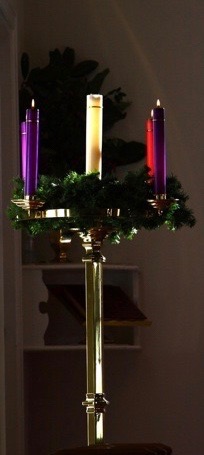
Today the celebration of Advent has been overshadowed by the secular celebrations of Halloween, Thanksgiving, and Christmas to the point that Advent is all but forgotten. The tradition of the Advent wreath still endures in our church liturgies, but its observance sadly is in decline in the homes of Christian families throughout our nation. The same is true for Advent Calendars. Because Christmas in our culture has become so commercial and has been celebrated to such excess, we have all but lost sight of how earlier Christians prepared for the Christmas season through prayer, meditation, and fasting.

Advent is a time set aside by the church to prepare ourselves to greet the Lord at the day of his coming through self-examination, penitence, and prayer. The first half of the fifth verse of the Christmas Carol “O Little Town of Bethlehem” expresses the purpose of our Advent preparations.

O Holy Child of Bethlehem, Descend to us we pray

Cast out our sin and enter in, be born in us today.

To observe Advent in our world today is counter-cultural. Although the world around us is hustling madly to prepare for Christmas, Advent offers a time to take a deep breath and to slow down. It is a time for self-examination and prayer — a time to think about how we are living as a disciple of Christ and to examine anew how we respond to God’s call to us. Advent observed properly is a season of both renewal and hope.

In the booklet, for which you will find a link below, you will find a short Advent service that you can use as a private devotion or as a service with family and friends around your Advent wreath. You might even use it along with your blessing at dinner. You also will find activities for all ages.

May you have a blessed Advent season in preparation for the coming of our Lord this Christmastide.

Advent Booklet 2018

ADVENT HOPE

piano keys illustration
Photo by Pixabay on Pexels.com

And the ransomed of the Lord shall return and come to Zion with singing; everlasting joy shall be upon their heads; they shall obtain joy and gladness, and sorrow and sighing shall flee away.   Isaiah 35:10

When I was sixteen years old, I sat on an airplane next to a man I have never forgotten. He was seated in the center seat of a crowded set of three seats. I was seated in the aisle seat. The man was returning from a trip to Venezuela where he had been given a circular brass shield, at least three and a half feet in diameter, with an intricate pattern pounded into it. The flight attendant asked me if I minded such a large object in front of my feet since it would not fit under the seat, in the overhead bins, or in the airplane closets. I said that I didn’t. Without this obstacle in front of us, we might never have spoken.

He was a balding man in his fifties with a fairly prominent nose, dark glasses, and a strong Eastern European accent. As we began to converse, we came to the topic of music. I do not remember everything that was said during our first conversation on the plane. I remember that he asked me if I played the piano. I told him that I had from the age of eight or nine until I turned fourteen and then had focused all my attention to the trombone. Somehow our conversation came around to the music of Frédéric Chopin and he asked me if I had any particularly favorite artists or recordings of Chopin. Undaunted by his presence and unaware of his musical prowess, I told him that I liked the recordings of Van Cliburn, whose “My Favorite Chopin,” a best-selling RCA album in the 1960s, was in my parents’ record collection. He seemed to wince as I told him this, perhaps, although he never said anything negative about van Cliburn, because his interpretation and playing of Chopin’s music was antithetical to his own. Little did I know that I was speaking to the Polish pianist Andrzej Wasowski (1919-1993), a man who Time Magazine in 1946 called “the greatest Chopin interpreter of modern times.”

A few weeks after the flight, I greeted him at the door of my home. After our in-flight conversation, knowing that I would appreciate his abilities, or perhaps to prove to me without words that his playing far exceeded that of van Cliburn’s, he invited me to his upcoming recital.

Andrzej Wasowski was a pianist who had emigrated to the United States from Poland. He came from a wealthy Polish noble family. His mother was a Princess and his father a vast landowner. In 1939 his dreams were shattered when the Nazis invaded his country and his family’s lands and property were forever taken from them. He told me how he was forced to play piano at the private parties of Nazi officers and on concert tours in Russia, where he was allowed to play anything but the work of Chopin, for fear that the nationalist sentiments raised by Chopin’s fiery and emotional piano music, would enflame the populace against the army of their occupiers.

Even at my young age, I sensed a certain sadness about him. I knew that the well of his emotions ran deep. The music of Chopin seemed to connect him to his lost homeland, his people, his mother, and the vast tradition of musical artists and performers. He played Chopin like no other!

I can only imagine what it would be like to have lost as much at once as he did. His sadness never seemed self-absorbed. It seemed to express itself in his music and in his kind and gentle manner to his students and friends.

As a child, I was surrounded by two very good piano players, my grand-mother Phillips and my mother.  I would play a tune and my grandmother, ever the severe critic, would tell me that I need to play it with expression. I had played all the notes correctly but that was not entirely what it was about. Expression is what separates the good piano players from the spectacular—and Mr. Wasowski was spectacular.

Maestro Autori, the Italian conductor of the Tulsa Philharmonic Orchestra, lived around the corner from our house. Before an upcoming recital, Andrej Wasowski, after visiting the nearby conductor, would stop by our house and invite me and my family to attend. I still have the programs from two of the recitals we attended in the 1970s.

At the intermission of one of his recitals, my father and I went up to greet him and commend him for his artistry. He showed us an enormous fluid-filled blister on his thumb, the like of which I have never seen. It stretched from the palm of his hand to the tip of his thumb. He had practiced and practiced for the recital and had played his heart (and his fingers) out during the first half of the concert. Perhaps the Beethoven piano sonata that had been played with such vigor was the culprit. He showed the blister to us privately, as if only to us, and soon was back without the audience ever being the wiser and played the entire second half of his recital with a few encores—never telling the audience of his physical handicap that day.

Sadly, I lost track of him during my years in seminary. A few years ago, while listening to the piano music of Chopin and Scriabin, I was inspired to find recordings Wasowski’s piano playing. Much to my surprise, I found recordings of Chopin’s 51 Mazurkas and 21 Nocturnes. I bought them immediately and went home to listen to them. At the same time, I discovered that Wasowski had died in 1993 in Washington, D. C.

The memories of his piano playing and his personal kindness came back to me at once.

In the season of Advent, we read the words of the prophet Isaiah in which he foretells a time in which God will restore all things. In the midst of the world in which war, famine, torture, death, and evil abounds, the arrival of the Messiah provides hope.

In the midst of a world in which it is so easy for us to become discouraged or even to give up hope, the music Andrej Wasowski played provided hope both to himself and to others. I wonder sometimes if it was the piano music he played that kept him from despair. Andrej had a kindness and gentleness borne of the immensity of loss in his life and the fact that in spite of all that he and his wife had raised a family. Even in an undeserved obscurity in the United States, he somehow still had hope, a hope that he quietly shared with others, that is until he began to play the piano. And how he could he play!

Even now when I hear his recordings of Chopin, I hear the wings of hope ever ascending. I’m not sure if it is the music of angels, but it comes pretty close.


WE ARE EUCHARISTIC BEINGS— THE IMPORTANCE OF GIVING THANKS

“Do not worry about anything, but in everything by prayer and supplication with thanksgiving let your requests be made known to God. And the peace of God, which surpasses all understanding, will guard your hearts and your minds in Christ Jesus.”  Philippians 4: 6-7


A few years I was talking to a stewardship consultant about churches and people we had met in our separate work and travels around the country. He asked me if I knew a certain priest from the Diocese of Oklahoma, the diocese in which I was ordained almost forty years ago. It happened that I did. Once, when newly ordained, I was having some difficulty in the mission congregations I served. This priest went out of his way to help me and I had not forgotten it. Even though I had not seen him since I moved away from Oklahoma in 1984, I knew that I needed to thank him once again. I certainly had thanked him at the time but I wanted to thank him once again to let him know that I had never forgotten what he had done for me. And so I called him up at the church he was now serving and expressed my thanks to him once more. We had a wonderful conversation. We caught up on what had happened to us and our families over the intervening years and we remembered what it was like for us to be young priests together in the Diocese of Oklahoma. I do not know how he felt after my phone call, but I know that for me I had completed something. I had given thanks and that, for me,  had made all the difference.

One of the things I have learned over the years of my life is that human beings are the happiest when they are thankful. Expressing our thanks to God and to one another is essential to our well-being.

Most Episcopalians know that the word eucharist is a Greek word meaning “thanksgiving.” When Episcopalians gather for worship they celebrate and offer to God a “Holy Thanksgiving,” a “Holy Eucharist.” This form of the Holy Eucharist is shaped by four actions. Jesus took bread, gave thanks to God, broke the bread, and distributed the bread to his followers. On the night before he was betrayed Jesus took bread in his hands, lifted it towards the heavens, with the usual ritual glance upwards towards the heavens, gave blessing and thanks to God. As he broke it he told his followers “this bread is my body” broken and given for you. He did the same with the cup of wine. As he offered the bread and the wine he added these words: “Do this in remembrance of me.”

When we relive this story together we often focus our attention on the suffering of Jesus. That is, of course, central to this event. At the same time, however, we often forget the central role of thanksgiving in this event. What if we were to tell the story this way: Jesus himself is a Eucharistic Being who, in thanksgiving to God, gave his own self for us and for our salvation? When we make Eucharist together we do so to give thanks to God in Christ and through the Holy Spirit for the life, death, and resurrection of Jesus who gave himself for us in thanksgiving to God. When we look at the Eucharistic event through the lens of thanksgiving it becomes evident that our participation in the eucharistic rite is an expression of thanksgiving to God.

Every time we make Eucharist together, we give thanks to the God who so wonderfully created us and to the God who so wonderfully redeems us.

When we make Eucharist together we give thanks to God for all that we are and all that we have. When we do so we are reminded that we like Jesus are also eucharistic beings, that is, we are people who are created by God to give thanks.

We Christians worship a God who is revealed in stories in which God showers blessings on the people of ancient Israel and on us in the person of Jesus Christ. God is not an abstract idea for us, but rather a God revealed in stories of love and concern for God’s people. When you look through the stories of the Scriptures you will see that God primarily is a giver. God always wants to give to God’s people. God showers blessings on God’s people because that is the nature of God.

From the earliest stories in the scriptures, God’s people have responded to the gifts God has given them by giving thanks in return. We are created by God and given life so that we might give thanks. The human being, in other words, is a eucharistic being. We are beings created to give thanks. If that is the case, then to be fully human, we have to learn how to give thanks to God and to do so in all circumstances.

St. Paul understood how important thanksgiving is to our lives. In 1 Thessalonians 5:18 he writes, “Give thanks in all circumstances; for this is the will of God in Christ Jesus for you.” In Philippians 4:6 he writes, “Do not worry about anything, but in everything by prayer and supplication with thanksgiving let your requests be made known to God.” In Colossians 3:17 Paul writes, “And whatever you do, in word or deed, do everything in the name of the Lord Jesus, giving thanks to God the Father through him.” In all of these examples — and there are many more like it in the New Testament— the word “eucharist” is central. We are who we are because we give thanks, because we are eucharistic beings.

When you begin to realize how central giving thanks to God is to your very being, to being the full person that God has called you to be, you will find that it will change the way you live.

Remember that you were made to give thanks and then offer to God the giver heartfelt thanks for all the gifts you have been given—food, family, shelter, friends, and so much more.

MEMORIZING HOLY SCRIPTURE

ancient blur calligraphy czterolinia
Photo by Pixabay on Pexels.com

I first became an acolyte in 1967 at St. John’s Episcopal Church in Tulsa, Oklahoma.  In those days the clergy, acolytes, lay readers and chalicists gathered in the sacristy prior to the service for prayers while the clergy vested and prepared for the service. Prior to the service the altar guild arranged the vestments on a vesting table in their traditional arrangement. As the clergy vested the people gathered prepared for service at the altar by confession and absolution and by the reciting of Psalm 43 in versicle and response format.  Together we prayed: “O send out thy light and thy truth, that they may lead me, and bring me unto thy holy hill, and to thy dwelling; And that I may go unto the altar of my God, even unto the God of my joy and gladness….” The order for this brief “service” of preparation was posted on the wall of the sacristy and on cards we held in our hands. As a result of this time of preparation, Psalm 43 was the first lengthy passage of scripture that I committed to memory.

The prayer book of the Episcopal Church in those days was the 1928 Book of Common Prayer. What many people do not know is that the Psalter in that prayer book was not taken from the King James Version of the Bible (1611 AD), but from the “Great Bible” (1539 AD) of Matthew Coverdale, commissioned in fact by Thomas Cramner, the author of the first English Prayer Book of 1549. The official English Prayer Book of 1662 and the 1928 Book of Common Prayer were almost everywhere influenced by the wording of the King James Bible except when it came to the psalms. Here tradition prevailed. When these two prayer books were issued, people were not willing to accept the newer wording of the King James Psalter but preferred in their place the familiar wording of the psalms from the Great Bible, already known and memorized by many of them. In an age when many could not read, the church could not afford to change the wording of the psalms in every generation, and so the tradition held. Even in 1928, Episcopalians were not willing to give up the familiar words of the psalms from the Great Bible for another translation, even one as venerable as the by-then tried and true King James Version.  When it comes to our liturgical forms, we Anglicans can sure hold on to our tradition!

In his “Golden Epistle,” the 12thCentury Cistercian monk William of St. Thierry urged his fellow monks to memorize passages of Holy Scripture:

Some of your daily reading should also each day be committed to memory, taken as it were into the stomach, to be carefully digested and brought up again for frequent rumination…

William hoped that as his fellow monks ruminated on the words of scripture and committed them to memory that the desire for prayer would arise within them.

It is a great comfort in times of prosperity and adversity to be able to recall by memory the promises and assurances of Holy Scripture.  I am still working to memorize the canticles and many of the psalms from the 1979 Prayer Book.  I have learned to love their words and wonderful phrasing. At the same time, Psalm 43 from the Great Bible is still firmly committed to my memory; I can recite it today as easily as I can the Lord’s Prayer.  In times of trouble, the words of this psalm comfort me and lead me to prayer.

5  Why art thou so heavy, O my soul? * and why art thou so disquieted within me?

6  O put thy trust in God; * for I will yet give him thanks, which is the help of my countenance, and my God.

LIFE TOGETHER IN CHRISTIAN COMMUNITY 

building architecture church monastery
Photo by Gratisography on Pexels.com

How very good and pleasant it is when kindred live together in unity!  (Psalm 133:1)

Because people are imperfect, there will always be conflict whenever they gather together to do anything.  The same is true of the church.  The realization that this is true is not enough; we Christians are called to form communities of forgiveness and reconciliation that are markedly different from others in the world in which we live.

In every letter St. Paul wrote, he offers advice and counsel to his fellow Christians on how are to behave towards one another.  He continually reminds all members of the body of Christ of the danger of dissension and exhorts them to practice love and respect for all members of the church.  Paul’s zeal is unflagging on this topic because he was keenly aware of how jealousies, passions, divisions, anger, lust, and all other sorts of human failings could weaken, and even destroy genuine Christian community.

In the Prayer of St. John Chrysostom, read at the end of Morning Prayer (BCP 102), we are consoled by the promise from the Gospel of Matthew “that when two or three are gathered together in his Name,” the Lord “will be in the midst of them.” The original citation from Matthew does not directly concern the presence of God at our corporate worship services but rather concerns the process by which disputes were to be settled within the early Christian community to which the gospel writer belonged.

If another member of the church sins against you, go and point out the fault when the two of you are alone… But if you are not listened to, take one or two others along with you, so that every word may be confirmed by the evidence of two or three witnesses….  Again truly I tell you, if two of you agree on earth about anything you ask, it will be done for you by my Father in heaven. For where two or three are gathered in my name, I am there among them (Mt. 18:15-17; 19-20).

Similarly, in the sixth century Rule of St. Benedict, St. Benedict outlines how monks, who live day in and day out in close quarters, should behave towards one another:

The monks are to bear with patience the frailties of others, whether in body or behavior.  Let them strive with one other in obedience to one other. Let them not follow their own good, but the good of others. Let them be charitable toward their brothers with pure affection (Chapter 72: 5-8).

This is one of the best descriptions that I know concerning what it means to love our neighbor, particularly the members of our own church community. Although Benedict wrote for a monastic community, his words apply to life together in any Christian community. Let’s examine each point.

  1. To bear with patience with the frailties of others

In the prayer that Jesus taught his disciples, the “Lord’s Prayer,” we are reminded that if we ourselves want to be forgiven, we have to learn to forgive others. That is because, as Jesus reminds us, we most often are troubled most by the faults in others that closely match our own faults. “How can you say to your neighbor, ‘Let me take the speck out of your eye,’ while the log is in your own eye?” (Mt. 7: 4-5).

The path towards Christian maturity is long and arduous. We cannot expect to be perfect all at once.  As we practice Christian charity and patience with others, we slowly begin to grow and mature ourselves. We, then, must learn first to be patient with our own faults and frailties and not to focus too soon on identifying and criticizing the faults of others.

  1. To live in obedience to one another

In the Rule of Benedict, obedience to the authority of the abbot, the spiritual leader of the monastic community, was a foundation to the stability of the monastic community. In earlier monastic rules, the authority of the abbot was absolute. Benedict softened this by reminding the monks that they were to live in obedience to one another because “by this road of obedience they shall travel to find God” (71). In Christian community we can learn from the advice, and even the loving admonitions, of others.  Benedict realized that sometimes we are not our own best guides. We can become lost and in need of the direction that others can offer us.

  1. To seek the good of others above our own good

Here Benedict reaffirms the witness of St. Paul who wrote, “Let no one seek his own good, but the good of his neighbor ” (1 Corinthians 10:24). In Christian community our life together should always center around our efforts to “edify,” one another, that is, to build up and support them and not to destroy them by our selfish attempts to draw attention to ourselves and our own needs.

  1. To be charitable with pure affection towards one another

When we read the Epistle to the Ephesians, alongside the Rule, we can see that Benedict’s ideas are thoroughly infused with the spirit of the writings of St. Paul.

I…beg you to lead a life worthy of the calling to which you have been called, with all lowliness and meekness, with patience, forbearing one another in love, eager to maintain the unity of the Spirit in the bond of peace (Ephesians 4: 1-3).

Where other forms of community, including much of our present-day business culture, thrive on competition and killer instincts, we in the church are called to form communities of forgiveness and reconciliation that are markedly different from others in the world in which we live. In genuine Christian community we are not to live in competition with one another but rather are called to form a community of mutual support and ministry. What can you do to make that happen?


COUNTRY MUSIC

acoustic acoustic guitar bowed stringed instrument classical
Photo by Pixabay on Pexels.com

When I was eleven years old I moved from New York to Tulsa, Oklahoma.  It was quite a different world from the suburbs of New York City where I had spent my childhood years. I was excited because I was finally going to see the city in which I had been born.  My family moved to Tulsa just before I was born and moved away from it when I was only two years old.  Now at the age of eleven, I had no knowledge and no memories of the place.

Tulsa was a different world from the world that I had known; I quickly adapted, however, to my new home. The temperatures in the summer often went well over 100 degrees F.  The food also was different. Chili, barbeque, and fried chicken were served everywhere.  I learned to like most everything about my new place of residence, except for the country music I heard everywhere around me. I never listened to it on my transistor radio, preferring instead to listen to the songs of the Beatles, Rolling Stones, and others on KAKC “Top Forty Countdown.” Country music, however, seemed to be loved by everyone else except for my parents and all of my peers.

When the football coach of Edison High School in Tulsa prepared our team to play the team from Muskogee High School, he wanted to stir up the emotions of his team toward their upcoming opponent. To do so, he played Merle Haggard’s hit country single “Okie from Muskogee” over and over and over again before, during, and after the practices until the players from Edison couldn’t stand even the mention of the name “Muskogee.”  As best I can remember, his plan worked and Edison defeated Muskogee.

Seven years after my graduation from high school, and after my graduation from college and seminary, I moved back to Oklahoma. For a year I worked as a chaplain in Oklahoma City.  During that year I first learned to appreciate the music that everyone else there seemed to like.  During the Oklahoma State Fair (after the rodeo!),  we attended a wonderful concert by Charlie Pride. It was rare then, as it is now to hear an African-American sing country music.  His voice was like velvet.  This concert did not bring about a sudden conversion to country music. My conversion, if you can call it that, was really more gradual than sudden.

I am sure you have heard the expression “what goes around, comes around.”  Maybe that explains, although I doubt it, why a year after our move to Oklahoma City, my bishop placed me in charge of two small Episcopal Churches in Eufaula and Muskogee, Oklahoma.

I might have been born in Tulsa, some 70-80 miles away, but I in no way was a country boy. In the town of Eufaula, however, I stood out like a sore thumb. My tweed coats and khaki pants just did not fit in.   I soon bought a cowboy hat and a pair of boots to wear with blue jeans and my clergy shirt so that I didn’t look so out of place.

At the same time my radio listening habits also began to change mostly because the local radio stations played only country music. Within a year, I began to preach regularly on KCES, a local station in Checotah, Oklahoma. If I wanted to sound like the other local preachers, I had to learn to say “Jesus” with three syllables.  I still had no intention, however, of becoming an “Okie from Muskogee.”

While continuing to listen to rock music, I began at first to listen to the country music of Waylon Jennings and Don Williams —and later George Strait and Alan Jackson—gradually branching out into bluegrass. It really didn’t take much for me to begin to like the music, once I allowed myself the possibility. The lyrics of country songs often tell a story that emotionally moves the listener. Some songs are happy, others are sad, some are silly, and some tell deep truths about living and loving.  That music helps me connect to my own feelings and emotions like no other

What I thought I had to avoid or to get far away from as possible had never really left me. It had grown along with me.  What I thought I didn’t like, even hated, had actually become dearer to me than I had ever realized.

My changing attitude towards country music is similar to the way many of us relate to our families. When we are first out on our own we may want to move as far away as we can from our parents or other family members in order to begin a life independent of their influence or control. As we grow older, we begin to realize how dear these same family members are to us and we may want both to be in closer proximity to them and to deepen our emotional ties to with them.

It is important to remember that you may not be fully aware of what really matters to you.  We are never too old to change or to learn to appreciate new things. Never assume that what you disliked at the age of eighteen, you must continue to dislike into old age.  Our God who creates, redeems, and sanctifies is forever offering new opportunities and new hope to us so that we can live full, abundant, and joyous lives in the present and in the years to come.  God often calls us to open our hearts and our minds!

RIVER OF DELIGHTS

cascade creek environment fern
Photo by Pixabay on Pexels.com

How priceless is your love, O God!

Your people take refuge under the shadow of your wings.

They feast upon the abundance of your house;

You give them drink from the river of your delights.

Psalm 36: 7-8 

I arrived at Mepkin Abbey, a Trappist (Cistercian) monastery in Moncks Corner, South Carolina, on a Monday afternoon to begin a retreat that would last until Friday. The monastery is located twenty-some miles north of Charleston, South Carolina on the banks of the Cooper River. The large estate on which the monastery is located was formerly owned by the Henry Luce family, the founder of the Time-Life empire. In 1949 the Luce family donated the estate, on which they are also buried, to the Roman Catholic Church for the purpose of building a monastery on that property.

This was by no means my first retreat at a monastery, but it was my first retreat at Mepkin Abbey. Just as every congregation has its own ethos and flavor, so it is with a monastery, I did not yet know what I would find there and how I would fit in. I checked into my room in the guest quarters and then hurried to eat my evening meal at 5 PM.  (The mid-day “dinner” served after noontime prayer is the main meal of the day and is the only cooked meal served at the Abbey.)

When I finished eating, I had some time to explore the famous gardens on the monastery grounds. As I walked through the garden I came upon the banks of the Cooper River.  It was a great surprise to me.  I had not looked at a map prior to my visit and so was surprised by the beauty of the wide river divided by a thin island, with water on both sides of it. It was hot and extremely muggy, but a strong breeze made it the most comfortable spot I found outdoors that day. I sat on the riverside and watched the current flow one way while the wind blew in the opposite direction as if it were trying to reverse the flow of the river.

Sitting by the banks of the river, I saw and heard fish jumping out of the water, launching themselves some two to three feet into the air. I thought to myself, “what a waste! Here I am by the river with no fishing rod or fishing gear. This would be great time to go fishing.” And then in a moment of insight I recognized the truth of that moment. I was not here to catch fish in the river but to drink from the water of life, to find refreshment from the living water that Jesus promises to all who believe in him. Later in worship as I read Psalm 36, I knew that I had come to “drink from the river of [God’s] delights.”

I had come to the monastery to allow God to work in me. My desire to go fishing I realized, while good and pleasant in itself, was symbolic of my (and I think I can safely  say, “our”) tendency to work too much, thereby not leaving much time for the reflection, silence, solitude, and prayer that provide God the space to work in us to renew, refresh, and replenish us so that we become more available both to God and to one another.

I  was at the Abbey to engage in a different kind of fishing—what might be called “no-fishing.” For a few days, I was to live and move within the river, not actively, but in a different manner of quiet and calm thus allowing God to fish for me as I opened myself to being captured and captivated by God’s love pouring from God’s “river of delights.”