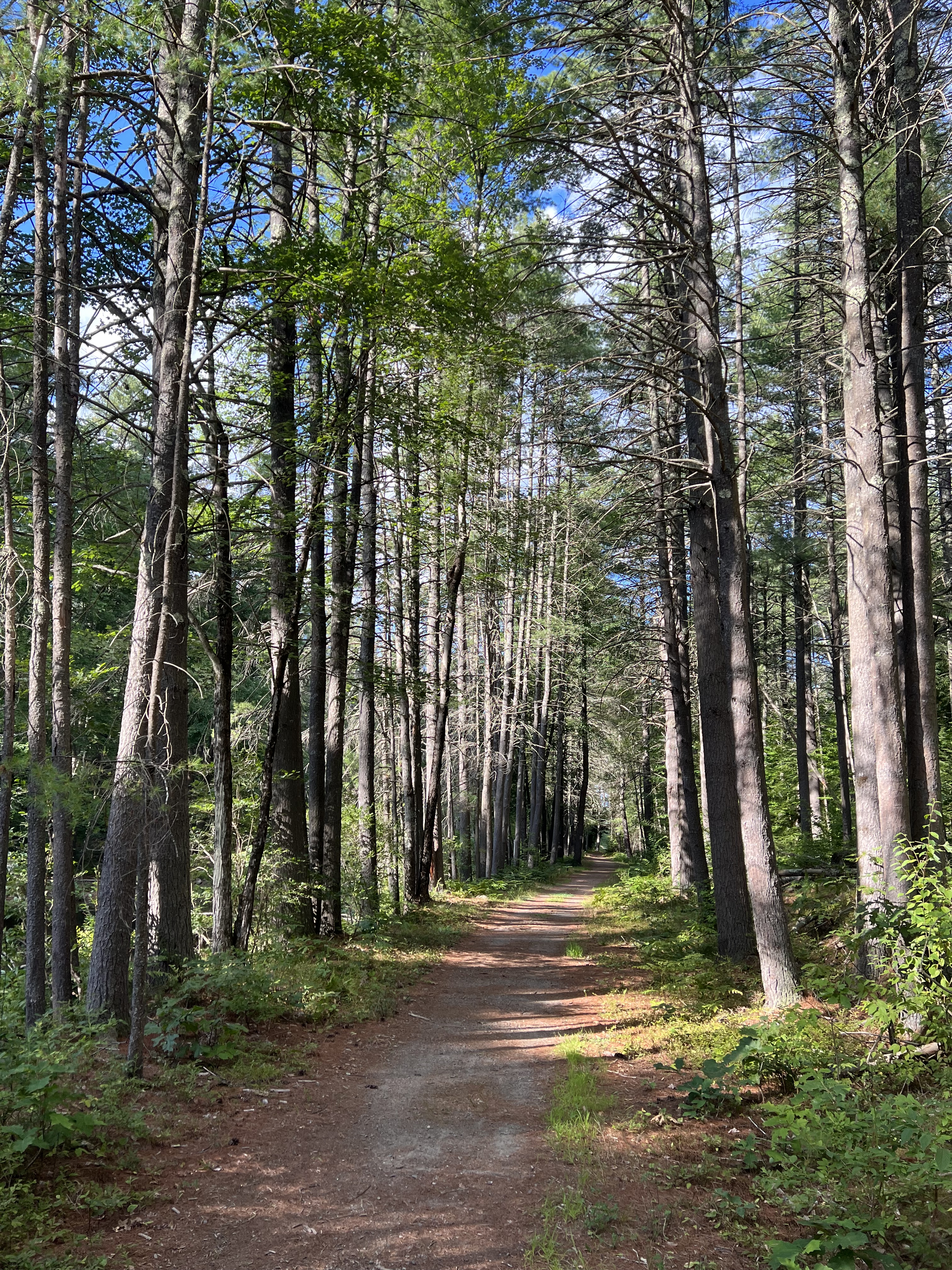
Photo by Craig A. Phillips
I’m fully retired again. In August, I agreed to fill in for two persons who were going on sabbatical, one a parish priest and the other a college professor. As a result, the rhythms of life in retirement changed for both me and my wife. I began working on Sunday morning preaching and celebrating at a parish about 40 miles from home and teaching two classes of “Biblical Theology” from Monday to Thursday at St. Anselm College in Manchester, NH, about 20 miles from home. Both of my classes began at 4:00 PM or after, so I spent most of the day prior to class preparing for the next class, grading, and corresponding with students and faculty. All of this had an impact on my wife as well, as she was around while I worked and stressed on my preparations. Our ability to do things together during the day and our ability to travel, visit our children and grandchildren, and other family members was limited by my new work schedule.
Throughout these somewhat hectic four months, I asked myself, “have I failed retirement?” The answer for me was “no.” After all, I had not returned to full time work. Both positions were part-time. But as anyone who has ever worked part-time knows, part-time often feels just the same as full-time. There was never any question that this was not work. It certainly was. At the same time, however, retirement gave me the opportunity to do the things I love. Isn’t retirement a time in which one has the chance to do the things you want to do, but do not have to do?
In a previous blogpost, “Getting the Hang of Retirement,” I wrote, “More than one of my retired friends has told me that it took them the better part of three years to get used to it. So, I am just a beginner. … In three years, I’ll let you know if I’ve finally gotten the hang of it.”
It has now been exactly two and a half years since I retired from full-time work. According to this self-imposed schedule, I only have six months left to figure it out. I can honestly say that this is a process, much as preparing for retirement is. It changes from day to day, week to week, and month to month. In six months I doubt I will fully get the hang of it — but I’m on my way. This is a time of life in which there are seemingly endless possibilities and only limited time in which to choose from them.
For now, we have begun to travel again to see family members we have not seen in a while. We have two to three trips planned for this year. I also am re-engaging with my academic writing and research in rare books and maps from the early 17th century with an end to publishing a journal article or perhaps a scholarly monograph. I am used to using the pressure of a deadline to focus my writing, but I am trying not to make this another task that feels like work, so I must figure out how to have fun doing it, without the feeling of compulsion that I must write so many pages a week. I often feel that if I am not working on my research and writing that I have somehow failed. Much as with retirement in general, it will take time to figure out how to engage in something that is fun for me to do, without feeling that it is one more task that must be accomplished as it would were it related to my employment.
There are only so many years when we will be able to travel and so many years left to write what I hope to write. How will I make the best use of that time? That question is important for all of us, no matter our stage of life. How will we best use the time that is given to us? That is a question to ponder again and again. Asking this question in retirement is different only because it comes after years of working, when we did many things that we did not really enjoy doing, but nonetheless had to do. Now we who are retired must answer that question anew in light of our circumstances.
I know that I must be retired again when I can’t remember what day it is, and everyday seems to feel like Saturday. Now there is time to do the things I love to do. Let’s go and see what happens!

 IN THESE TIMES