THE PROMISE OF THE HOLY SPIRIT

calm sky
Photo by Sindre Strøm on Pexels.com

While they were perplexed about this, suddenly two men in dazzling clothes stood beside them. The women were terrified and bowed their faces to the ground, but the men said to them, “Why do you look for the living among the dead? He is not here, but has risen. Luke 24:4-5

When he had said this, as they were watching, he was lifted up, and a cloud took him out of their sight.  While he was going and they were gazing up toward heaven, suddenly two men in white robes stood by them.  They said, “Men of Galilee, why do you stand looking up toward heaven? This Jesus, who has been taken up from you into heaven, will come in the same way as you saw him go into heaven. Acts 1:9-11

Every few years a blockbuster film is released and we are inundated by the hysteria caused by it.  Long before the release of the film, massive numbers of toys are released to stores and fast food restaurants and the rush to buy Star Wars “collectibles” is on. Today what we call “collectibles” used to be called “souvenirs.”

We human beings have a need to surround ourselves with reminders of where we have been and what we have done. We buy souvenirs, I think, to prove to ourselves and to others that we really were “there” and to impress on ourselves and on others the importance and meaning of the experience we had “then.”

Often we do not fully experience an event because we are trying so hard to preserve it forever. We are trying so hard to remember it, that we forget it all the more easily. Here is an example from my own experience.  At the defense of my dissertation at Duke University, Stanley Hauerwas, a professor on my dissertation committee, asked me to reflect on something Noam Chomsky had written. He read a long passage aloud quickly.  I did not have a copy of what he was reading before me. While he was reading, I was trying to memorize what he was saying so that I could comment on it when he finished.  I remember saying to myself as he read, “remember that, and remember that, and remember that….” When he finished, Dr. Hauerwas said to me: “What do you think about that assessment? I couldn’t remember a thing. I had tried so hard to preserve the memory, that I had remembered nothing. A friend of mine, who faced a similar encounter, a year or so later from the same professor, coolly asked if he could see and read the passage for himself. Why didn’t I think of that?

When the floor of Cameron Indoor Stadium, that fantastic arena in which many a great Duke Blue Devil basketball player has played, was replaced, fundraisers at Duke University were no fools. They sold off small pieces of the wooden floor to eager fans who wanted a piece of the place— more particularly a piece of the memories of what had happened in that place, and of all the people who may have played on that floor. Buyers now, for a fee, could hold a souvenir of basketball history in their own hands and own it.

Through the souvenir of a place or event, we hope to remind ourselves of who and where we were and to capture a piece of that experience forever. The living flowing blood that surged through our bodies when we experienced an event or a place first hand, is now in the object of the souvenir, a hardened piece of coagulated memory.

Early on Easter morning, a few women drawn from the group of Jesus’ disciples arrived at the tomb where Jesus had been hastily buried on the previous Friday just before the beginning of Passover. They had come at the first opportunity after the end of the Sabbath to anoint and prepare Jesus’ body for burial. Angels (literally “messengers”) of God ask them why they are looking amidst the past for Jesus. “He is not here, but has risen,” the angels remind the women.

After his crucifixion, the disciples fled Jerusalem, where their Lord had been crucified, and returned to the safety of the Galilean countryside. There they resumed fishing and their several occupations. At Jesus’ ascension into the heavens, the disciples are told to return to Jerusalem, a place of uncertain risk and danger, and to wait for their mutual empowerment by the Holy Spirit. Then they are to proclaim the good news of what God had done in Jesus to “the ends of the earth.”

At the tomb and at his Ascension, the attention of the disciples was fixed on what Jesus had already done and on the places where they had known him. The task of the angels, God’s messengers, was to move the attention of the disciples from the past on to what they must now do in the present. Only when this was accomplished, could they continue the ministry that Jesus had begun, but now in places the historical Jesus had never been.

The disciples easily could have held on to the places in which Jesus had done this or that, or to objects Jesus had touched or held. In other words, they could have remained in Galilee. To be faithful to the ministry to which Jesus had called them, they had to give up the “souvenirs” which might have held them to the past and its demands, and move towards Jerusalem.  If they had held on to the past, they would have missed new opportunities for lively mission and ministry.

Think of the ways in your life in which you may be holding on to the souvenirs of the past. Would you be willing, if God called you in a similar manner to move from the safety of Galilee to the risky and uncertain Jerusalem, knowing that there you would be empowered and your life renewed and restored by God’s holy and life-giving spirit?  God’s promise to us is that we can let go of everything from the past that hinders us and that God will renew, reform, and restore us by the power of the Holy Spirit.  What would it take for you to step forward in faith?


“FOR GENTLENESS IN MY DEALINGS”

sunflower plant
Photo by David Dibert on Pexels.com

A long time ago — when I was in high school — I bought a pocket-sized pamphlet of 102 short prayers.  They were written by Malcolm L. Playfoot, “Sometime Administrator of the (Anglican) Society of the Companions of St. Francis.” A Saint Francis Prayer Book was published by the Society for the Preservation of Christian Knowledge (SPCK) in London in 1941. I carried it with me for years until I lost it. Then in the early 1990s, the book was reprinted, and I bought another copy that I carry with me to this day.

The book contains prayers for all sorts of occasions and occurrences in our lives. There is one for “On hearing Bad News,” another “Before reading a Serious Book,” one “Before Going Shopping,” and another for “Square Pegs in round holes.”

The prayer that has most stuck in my mind, ever since I first encountered this collection of short prayers, is the one titled, “For Gentleness in My Dealings.” The prayer, written long before inclusive language was the norm, is as follows:

“Grant me, Lord, to be so much thine that I may fitly show thy presence in all my dealings. Give me thy patience, thy sympathy, and thy love, that wherever I may be men may see, not me, but thee.”

It is not surprising that this prayer is included in a book inspired by the witness of St. Francis to the Christian virtues and manner of life. Francis endeavored to live his life in imitation of Jesus Christ. At the heart of this manner of life is a certain gentleness and peacefulness.

Each of us is created in the image of God and in the image of Christ. The reminder implicitly posed to each of us by this prayer is that each of us who endeavors to live the Christian life should also reflect the presence of Christ that is within us to those around us, that wherever we may be others may see not [you] but the presence of Christ within you.

In the letter that St. Paul wrote to the church in Philippi, he urges Christians to “Let [their] gentleness be known to everyone” (Phil. 4:5). We find descriptions of what that gentleness looks like in other places in the New Testament. It is, for example, tolerant and willing to take into consideration the opinions of others: “the wisdom from above is first pure, then peaceable, gentle, willing to yield, full of mercy and good fruits, without a trace of partiality or hypocrisy” (James 3:17). Living this manner of life, we are also “to speak evil of no one, to avoid quarreling, to be gentle, and to show every courtesy to everyone” (Titus 3:2).  That is because true, genuine love “does not insist on its own way; it is not irritable or resentful” (1Cor. 13:5).  Finally, St. Paul sums it up when he writes: “Let love be genuine; hate what is evil, hold fast to what is good; love one another with mutual affection; outdo one another in showing honor” (Rom. 12:9-10).

In a genuine Christian community, each person acts with gentleness to the other, each recognizes the presence of Christ in the other, and each reflects the presence of Christ back to the other.  This reciprocity of gentleness and kindness, in imitation of Christ, is at the core of Christian ethics. Christian ethics ultimately is about how we act as Christ’s representatives in the world. Gentleness in our dealings with one another is a good place to start.

Try saying this simple short prayer for “Gentleness in my Dealings” each day. See if it begins to change the way you deal with others in your daily life.

AWAKE, SLEEPER

“So teach us to number our days that we apply our hearts to wisdom” — Psalm 90: 12

In the Ash Wednesday liturgy, we are reminded that we are formed out of the dust of the earth and that unto that dust we shall return. Even when we live our lives in faith, trusting God each and every day, we cannot know the exact hour of our death. One day, your life and mine will end. That is not idle speculation, but a truth we cannot avoid.

It is possible, of course, to live much of our lives blissfully unaware of our own mortality, that is until someone close to us dies and we are harshly reminded of our own finitude.  We live in a culture that, for the most part, acts as if life goes on and on forever. In his Pulitzer Prize-winning book, The Denial of Death, Ernest Becker argues that the fear of death is the mainspring of human activity. The rush of our activity is the very mechanism that we employ to deny the reality of our own mortality.

Ten or twelve years ago as I was reading, an unexpected quote from the French literary theorist Roland Barthes struck a chord within me. I still remember it. In a lecture Barthes gave in 1978, he remarked:

The middle of my life is nothing other than the moment when I discover death as real.  And then all of a sudden is produced this evidence, on the one hand, that I no longer have time to try several lives.  I have to choose my last life, my new life, my vita nuova; and on the other hand, I must leave this tenebrous state where the wear and tear of repeated work and mourning have conducted me.

Barthes’ words spoke to me in a number of ways. The first was to remind me that I am beyond middle-aged. To this time, I have lived the life of parish priest and professor and, like most people I know, I still wonder at times what it might be like to try a completely different profession. When I was young, I could dream of all my possible futures, now in the years past middle-age I must endeavor to live the life I now have — the only life I have — to its fullest.

Second, I realized how important is it to take time to reflect on the life we now are living. When we purposely remind ourselves of our own mortality, it helps us to become better stewards of the life that we have been given.  Because we have a limited life on this earth, we must learn, as the psalmist says, “to number our days,” striving each day to live the best life that we can with what we have been given.

The good news of the gospel is that death is not our final end.  The resurrection of Jesus from the dead inaugurates the possibility of both a “vita nuova,” a new life, in the present and of eternal life with God in our future.  St. Paul recognized this when he wrote, “…If anyone is in Christ, there is a new creation: everything old has passed away; see, everything has become new!”(2 Cor. 5:17).

What would it look like if you were to claim the new life that God has in store for you? What would it take for you to live the life that God has given you to the fullest? “

“Awake O sleeper, and arise from the dead, and Christ shall give you light” (Eph. 5: 14) and life.


GIVE THANKS IN ALL CIRCUMSTANCES


backlit clouds dawn dusk
Photo by Pixabay on Pexels.com

In June of 2013, I flew to Belgrade, Serbia to take part in a four-day ecumenical conference in Belgrade, Serbia organized by the Ecclesiological Investigations International Research Network. The conference, entitled “Religion, Authority and the State: From Constantine to the Secular and Beyond,” brought together theologians, religious scholars, and clergy from a variety of religious traditions. The conference commemorated the 1,700th anniversary of the Edict of Milan. That was the edict in which the Emperor, Constantine and Licinius, his co-Emperor at the time, proclaimed religious tolerance in the empire, allowing Christians to practice their faith openly.

Belgrade was chosen as the site for the conference because Constantine was born in the ancient city Naissus in the Roman province of Moesia, the area on the south side of the Danube River, in what today is the modern Serbian city of Nis, located about 125 miles southeast of Belgrade.

At the conference, I presented a paper entitled, “Theo-political Visions: Post-secular Politics and Messianic Discourse” in which I discussed a variety of secular philosophers in Europe who are interested in the writings of St. Paul primarily for the form of their argument and not for their religious content. (The paper later was published in the academic journal, Ecclesiology.*)

I packed my bags so that I could take my suitcase onto the airplane with me. For reasons still inexplicable to me, Air France required me to check my suitcase at the last minute.   My flight arrived late in Paris leaving me with less than forty minutes to get to another terminal and board my flight on the former Yugoslav National Airline, JAT.  JAT stands for Jugoslovenski Aerotransport. The troubled politics of the Balkans are still evident in little things such as the name of the airline. Yugoslavia ceased to exist more than twenty years ago, but Belgrade, the former capital of Yugoslavia, is now the capital of Serbia.  The Serbians have not given up their past and cling resolutely to whatever they can of their former pride.

When I arrived early on Monday morning in Belgrade my bag had not made my connecting flight. Fortunately, I had the medicine I needed, my phone, and a few electronic devices in my carry-on but some of the power cords and adapters were still in my suitcase.  If I had planned to lose my bag, I might have made some different decisions about what I packed and where I packed it.  (I might also have gotten some insurance to cover lost or delayed baggage.) As it turned out the only clothes I had on arrival were the clothes I was wearing— blue jeans and a long-sleeved dress shirt with black dress shoes.   That might have been fine if it had not been ninety-five-plus degrees with high humidity for the entire week I was there.  The heat index made it even hotter than it was at home that week, and it was pretty hot at home.

Without my suitcase, I tried to make the best of it. On Monday, I was fine. Tuesday, my shirt was thoroughly soaked with perspiration and I was miserable whenever I ventured outside. On Wednesday I bought a short-sleeved black t-shirt for around 5 dollars and a pair of sandals. On Thursday, my bag finally arrived in the afternoon, just one half-hour before I was scheduled to present my paper. I was thankful to have my baggage with a few changes of clothes to wear over the next two day until I departed Belgrade for Dulles International Airport early on Sunday morning.

Reflecting on my trip, I realized once again, in case I really hadn’t already learned this lesson, that “things do not always go as planned.” I also was reminded that it is possible to live with very little.  I do not have to have all the things that I have to live a full abundant life. In Belgrade, I did not need a full wardrobe of clothes, or even a small suitcase full of them, to enjoy the company of friends and fellow travelers. The same is true when I am home with all with which God has blessed me. These things are easy to forget.

When things do not go as planned, we can get angry, despair, or move on as best we can.  It is better, I have found if we can do so thankfully and happily rather than in disgust and bitterness.  I find great assurance in words written by St. Paul to the Christians in Thessalonica:

Rejoice always, pray without ceasing, give thanks in all circumstances; for this is the will of God in Christ Jesus for you (1 Thess. 5).

You might ask, “how can Paul really say that I should learn to “give thanks to God in all circumstances.” In all circumstances?  That’s what Paul says and that is what he meant.  In another letter, this time to the Philippians Paul wrote the following:

…For I have learned to be content with whatever I have. I know what it is to have little, and I know what it is to have plenty. In any and all circumstances I have learned the secret of being well-fed and of going hungry, of having plenty and of being in need (Phil. 4:11-12).

Next time you find yourself in a situation in which things do not go as planned, remember the admonitions of Holy Scripture and try as best you can to give thanks to God in every circumstance in which you find yourself.


* Craig A. Phillips, “Theo-political visions: Post-secular Politics and Messianic Discourse,” Ecclesiology 10 (2014), 337-354.

JOY

active-activity-beach-40815

I taught myself to play guitar in 9th grade so that I could play at the 12:30PM folk mass at my home parish in Tulsa, OK. It was the fourth worship service of the day. Often I served as an acolyte at one or two of the previous services before playing guitar and singing at the folk mass.

One of the first songs I learned to play was quite simple. It only had three chords. The 8 words of the chorus of the song, “The joy of the Lord is my strength,” were taken from the Old Testament book of Nehemiah (Neh. 8:10). The melody is nothing special, but I find the words difficult to forget. How is it that I find joy in the Lord? Where and when do I find this?  If I don’t find it or feel it, is something wrong with me? These are but a few of the questions that arise whenever this verse comes to mind. I am sure that the words are true, but I often wish that I could find that joy more often than I do.

Holy Scripture exhorts us in numerous places to find joy in our relationship with God and with one another. Saint Paul, for example, exhorts the Christians living in Philippi to “rejoice in the Lord always.” He even goes on to say that we should be thankful in all circumstances. What does he really mean by that? How can we be joyful and thankful to God for everything that happens?

St. Paul provides a hint. He writes, “Rejoice in the Lord always…. Do not worry about anything, but in everything by prayer and supplication with thanksgiving let your requests be made known to God” (Phil 4: 4-5). To experience joy, in other words, we have to let go. Joy is perfect freedom from worry and anxiety and at the same time thanksgiving and gratitude for what God already has given us. To find joy we have to learn to be thankful for what we have, not for what we don’t have. This flies in the face of our consumer culture in which advertisers continually remind us of what we don’t have and what we have to have to be happy. True joy comes from letting go of worry and learning to be happy with what we have. This takes practice.  That is why we learn to do this only as we grow and mature in the Christian faith.

Relax, count your blessings, be thankful to God for what you have and you will find that the joy of the Lord is your strength.


NEWSPAPER EPIPHANIES


Photo by rawpixel on Unsplash

“I pray that the God of our Lord Jesus Christ, the Father of glory, may give you a spirit of wisdom and revelation as you come to know him, so that, with the eyes of your heart enlightened, you may know what is the hope to which he has called you….”      Ephesians 1:18

When I was an elementary school student in Westchester County, NY, where I lived for 9 years as a child, I had my own daily subscription to the New York Herald Tribune. It was delivered to me at my school each and every weekday. So, at an early age, I learned the pleasures of reading the newspaper.

No matter how hard I try to get with digital editions of newspapers, I still prefer reading the printed page, over which I can scan my eyes all over the page or pages to find and read what interests me. It’s harder to do that when you have to hit a link for each article to show up.

One of my favorite things to do is to read newspapers from other cities and countries. When friends ask if there is something they can pick up for me on their overseas trips, I usually say, “please, bring a newspaper.” Most of the papers are in languages I can read or at least muddle through. Once, however, when I was a teenager, my father returning from a business trip bought me a Turkish paper that I was unable to read; I just looked at the pictures.

Now, of course, most newspapers from around the world can be read online. I look at the New York Times and the Washington Post nearly every day. But at night, some time before bed, I regularly look at online editions of the Neue Zürcher Zeitung (Zürich), Die Zeit (Hamburg), Le Monde and Le Figaro (Paris), The Irish Times (Dublin), Frankfurter Allgemeine (Frankfurt), Süddeutsche Zeitung (Germany), The Guardian (Manchester), The Daily Telegraph (London), and The Independent (UK), along with a few papers in languages that I do not read much at all but enjoy for the challenge of parsing out the language. These include papers from Italy, Holland, and Sweden.

I’m sure that reading newspapers from around the world is a form of vicarious travel but I think it is much more than that.

The novelty of the new and the difference in perspectives is something I value. What seems so important to daily life in the metropolitan Washington, D. C. area isn’t even mentioned in the Boston, Chicago, or London papers.

At the same time, it is a chance to see that everyone doesn’t see the world just the way I do or the way most Americans do. It opens our eyes and widens our perspectives. We need that sometimes because it is so hard to get out of one’s own narrow view of things. Different perspectives challenge us to think again about our ideas, our cherished notions of how things work.

Newspapers report the context of our daily life. They often focus on things that terrify us, from acts of terrorism and violent crime to natural disasters and human frailty and corruption. There also are many heart-warming stories of human self-giving, sharing, and understanding.

When you read the papers from around the world, it becomes apparent that we all share a few things. We share the earth and we share a need for meaning and purpose.

Sometimes when we read the news it is difficult to discern the presence of  God in it. There is so much bad news. While helping the newspapers sell subscriptions, reading the news can at times be pretty depressing. It may be difficult for us to recognize the epiphanies or manifestations of God in our world.* That may be because we may be looking in the wrong places. The epiphanies of God that occur in the lives of individuals and are easy to miss.  St. Paul’s prayer for his fellow Christians is that “our inner eyes may be enlightened” so that we will be able to see the marvelous grace of God at work in the world. As we read or hear the news, we too may need to pray that our inner eyes be opened so that we may see the manifestations of God in our midst and trust in the hope to which God has called us.

With your eyes opened, who knows what you might see?

*In the season of Epiphany, we tell the story of the manifestation of Jesus Christ to the world, first to his own people and then to all the nations, that is, to the Gentiles.

SURPRISE AND WONDER

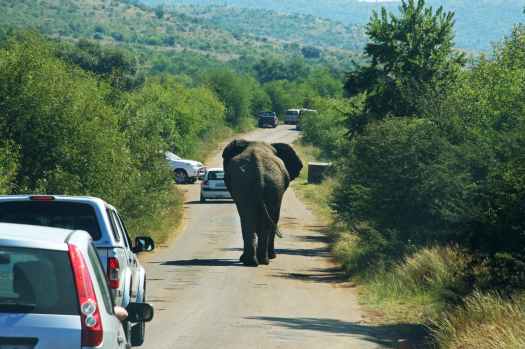
photography of elephant on road
Photo by Magda Ehlers on Pexels.com

In the late evening of January 2nd, some years ago, I was driving a rental car to Tampa, Florida, from which my family and I were scheduled to take a flight home the next morning.  We were traveling on a barren stretch of road between U.S. 41 and Interstate 75 near Bonita Springs, a city on the southwest coast of Florida. Up ahead we saw the flashing lights of what appeared to be a police car. At first, we thought that there must have been an accident or that someone had been pulled over for a traffic violation.  We slowed down a bit but kept moving forward. When we got closer we saw two police vehicles, with lights flashing, blocking our lane of traffic and a pickup truck, also with lights flashing, moving towards us in the opposite direction.

The pickup truck pulled up beside us and the driver rolled down his window and said straightforwardly to me, “Turn on your flashing lights and pull over, we’ve got a couple of elephants coming through.” Although puzzled by the meaning of his words, I did as he asked and stopped the car, turned on the flashing lights, and waited to see just what he was talking about. We all peered through the front window of the car trying to see what was ahead of us. Out of the darkness of the night emerged a long string of elephants. The elephants—we counted 13 to 14 of them— were linked, trunks to tail in one long and impressive procession. Handlers walked alongside the elephants guiding them in a straight line with the ropes attached to them. We could not believe what we were seeing.

I rolled down the window on the driver’s side to get a better look. One of the elephants, perhaps hearing the noise of my car engine or perhaps scared by me and the others in the car peering at him/her lifted up his front foot, and made a loud noise—the kind that elephants make— and moved towards our rental car. The handler pulled on the ropes to calm the elephant down. I, for my part, quickly rolled up the window.

The elephants were followed by 20 of more zebras, one mule, and then 20 to 30 horses.   In no time the animals and handlers passed us by and I drove off wondering what in the world had just happened.

We quickly began to talk amongst ourselves, telling and retelling the story of what had just happened. We wondered aloud just how we might have explained it to our auto rental company if that disturbed elephant had stepped on top of our car.  Realizing the utter absurdity of the story, and the likelihood that we would all be judged quite insane had something like that actually happened, we laughed with utter joy and frivolity.

The most remarkable thing about this experience was that it was completely unexpected.  Nothing we had done that day could have prepared us for this event. It came as a complete surprise.

I’m sure that the earliest followers of Jesus must have sounded crazy to others when they claimed that they had found the Messiah, or when they later claimed that this Messiah, who had been crucified by the Romans, had been raised by God from the dead.

Although others may have thought that these followers of Jesus had gone off the deep end, those surprised by God’s glorious and unexpected actions, I’m sure, experienced a complete and utter joy when they told others about what they had seen and heard.

In the season of Epiphany, we tell and retell the stories of the manifestation of God’s goodness and love to the nations, particularly in the person of Jesus Christ.

These epiphanies of God’s grace and goodness, however, are not limited to the past. God’s mercy and goodness are new every day. Pay attention this season to the ways in which God moves in your life. Take time to share with others the joy and wonder of those unexpected moments in which you, perhaps for a moment, become aware of God’s grace in your life.

THE LIGHT OF LIGHT, THE LIGHT OF LIFE — A CHRISTMAS MEDITATION

The canonical gospels tell the Christmas story in two different ways. The one more familiar to us is that of the birth of Jesus in Bethlehem in Judea as told in the gospels of Matthew and Luke.  (The gospel of Mark doesn’t tell this story at all.) The second is the one told in the gospel of John. Here we find the story of how Jesus, the word of God, became fully incarnate in human flesh. It is the story of how God entered into the world in splendid light. The writer of the gospel of John writes of Jesus, “in him was life, and the life was the light of all people. The light shines in the darkness, and the darkness did not overcome it”(John 1:4-5).

Later in the same gospel, Jesus says, “As long as I am in the world, I am the light of the world”(John 9:5). And, “I am the light of the world. Whoever follows me will never walk in darkness but will have the light of life” (John 8:12). Jesus is the light of the world. He is “God from God” and “Light from Light” as we affirm in the Nicene Creed.

The central Christmas message is that God became incarnate in Jesus. That is true whether it is told as the narrative of the birth of a child as in Matthew and Luke or in a more symbolic way as in John.

In the worship services of the Episcopal Church we read and tell the story of the birth of Jesus in Bethlehem at our Christmas Eve and Christmas Day services. We read and tell the story of Jesus, as the light that enters a darkened world, being born in human flesh, on the first Sunday after Christmas. Both stories are read and proclaimed during the twelve days of the Christmas season.

We find many references to light and darkness in the gospel of John. In the first chapter of John, Jesus, the light of the world, enters a world full of darkness. The darkness now threatened by that brightness of that light is not able to overcome the power of that light, a light that comes from the very being of God (John 1: 4-5).

We can understand the darkness of the world in two ways —the first, in historical, political and social terms, and the second, in personal terms.

That world is a place full of darkness. Darkness is a metaphor for human sin, greed, corruption, and all of the things that are not in accord with the purposes for which God created them. [1]  We see the darkness of the world in crime and lawlessness. We see it in political institutions and governments. We see it in social inequality and injustice.

We also find darkness within our own selves. We see it in the sinful and self-indulgent appetites that make ourselves the center of the universe, often to the detriment of others. We see it in our quickness to find fault with others without realizing that those same faults are found in us. We see it in the dishonesty of the little things in daily life that we just let slide, saying that it is someone else’s problem and not ours. We see it in the lack of concern for the welfare of others. And we see it in our failure to love our neighbors as we love ourselves.

At the same time, we find this darkness even deeper within us, in our loneliness and lack of hope. The world can be a dark and hopeless place. Sometimes, we are just a breath or two away from despair.  That is when we need to hear the good news of Christmas most of all. “Do not be afraid; for see—I am bringing you good news of great joy for all the people: to you is born this day in the city of David a Savior, who is the Messiah, the Lord” (Luke 2:10-11).

When hope is thin and frail, Jesus comes to us in our own dark night. He comes into the world to be near to us, to bring light into our darkness — to console us, and to save us. He comes to us in our weakness and our frailty, to enlighten the darkness within us, to bring hope. And when he comes, he brings light and peace that all may be well.

With the Mary and Joseph, the humble shepherds, and the heavenly host of angels let us give thanks to God for the gift God has given us at Christmas, the gift of God’s own self, in the person of Jesus. Gloria in excelsis Deo.

Footnotes

[1]‘Light’ and ‘dark’ are guiding metaphors for John’s gospel.  They have attracted overtones of racial bias that are inappropriate and have no place in the good news of Christ, who brings salvation to all people, light-skinned and dark-skinned alike.


MEMORIZING HOLY SCRIPTURE

ancient blur calligraphy czterolinia
Photo by Pixabay on Pexels.com

I first became an acolyte in 1967 at St. John’s Episcopal Church in Tulsa, Oklahoma.  In those days the clergy, acolytes, lay readers and chalicists gathered in the sacristy prior to the service for prayers while the clergy vested and prepared for the service. Prior to the service the altar guild arranged the vestments on a vesting table in their traditional arrangement. As the clergy vested the people gathered prepared for service at the altar by confession and absolution and by the reciting of Psalm 43 in versicle and response format.  Together we prayed: “O send out thy light and thy truth, that they may lead me, and bring me unto thy holy hill, and to thy dwelling; And that I may go unto the altar of my God, even unto the God of my joy and gladness….” The order for this brief “service” of preparation was posted on the wall of the sacristy and on cards we held in our hands. As a result of this time of preparation, Psalm 43 was the first lengthy passage of scripture that I committed to memory.

The prayer book of the Episcopal Church in those days was the 1928 Book of Common Prayer. What many people do not know is that the Psalter in that prayer book was not taken from the King James Version of the Bible (1611 AD), but from the “Great Bible” (1539 AD) of Matthew Coverdale, commissioned in fact by Thomas Cramner, the author of the first English Prayer Book of 1549. The official English Prayer Book of 1662 and the 1928 Book of Common Prayer were almost everywhere influenced by the wording of the King James Bible except when it came to the psalms. Here tradition prevailed. When these two prayer books were issued, people were not willing to accept the newer wording of the King James Psalter but preferred in their place the familiar wording of the psalms from the Great Bible, already known and memorized by many of them. In an age when many could not read, the church could not afford to change the wording of the psalms in every generation, and so the tradition held. Even in 1928, Episcopalians were not willing to give up the familiar words of the psalms from the Great Bible for another translation, even one as venerable as the by-then tried and true King James Version.  When it comes to our liturgical forms, we Anglicans can sure hold on to our tradition!

In his “Golden Epistle,” the 12thCentury Cistercian monk William of St. Thierry urged his fellow monks to memorize passages of Holy Scripture:

Some of your daily reading should also each day be committed to memory, taken as it were into the stomach, to be carefully digested and brought up again for frequent rumination…

William hoped that as his fellow monks ruminated on the words of scripture and committed them to memory that the desire for prayer would arise within them.

It is a great comfort in times of prosperity and adversity to be able to recall by memory the promises and assurances of Holy Scripture.  I am still working to memorize the canticles and many of the psalms from the 1979 Prayer Book.  I have learned to love their words and wonderful phrasing. At the same time, Psalm 43 from the Great Bible is still firmly committed to my memory; I can recite it today as easily as I can the Lord’s Prayer.  In times of trouble, the words of this psalm comfort me and lead me to prayer.

5  Why art thou so heavy, O my soul? * and why art thou so disquieted within me?

6  O put thy trust in God; * for I will yet give him thanks, which is the help of my countenance, and my God.

LIFE TOGETHER IN CHRISTIAN COMMUNITY 

building architecture church monastery
Photo by Gratisography on Pexels.com

How very good and pleasant it is when kindred live together in unity!  (Psalm 133:1)

Because people are imperfect, there will always be conflict whenever they gather together to do anything.  The same is true of the church.  The realization that this is true is not enough; we Christians are called to form communities of forgiveness and reconciliation that are markedly different from others in the world in which we live.

In every letter St. Paul wrote, he offers advice and counsel to his fellow Christians on how are to behave towards one another.  He continually reminds all members of the body of Christ of the danger of dissension and exhorts them to practice love and respect for all members of the church.  Paul’s zeal is unflagging on this topic because he was keenly aware of how jealousies, passions, divisions, anger, lust, and all other sorts of human failings could weaken, and even destroy genuine Christian community.

In the Prayer of St. John Chrysostom, read at the end of Morning Prayer (BCP 102), we are consoled by the promise from the Gospel of Matthew “that when two or three are gathered together in his Name,” the Lord “will be in the midst of them.” The original citation from Matthew does not directly concern the presence of God at our corporate worship services but rather concerns the process by which disputes were to be settled within the early Christian community to which the gospel writer belonged.

If another member of the church sins against you, go and point out the fault when the two of you are alone… But if you are not listened to, take one or two others along with you, so that every word may be confirmed by the evidence of two or three witnesses….  Again truly I tell you, if two of you agree on earth about anything you ask, it will be done for you by my Father in heaven. For where two or three are gathered in my name, I am there among them (Mt. 18:15-17; 19-20).

Similarly, in the sixth century Rule of St. Benedict, St. Benedict outlines how monks, who live day in and day out in close quarters, should behave towards one another:

The monks are to bear with patience the frailties of others, whether in body or behavior.  Let them strive with one other in obedience to one other. Let them not follow their own good, but the good of others. Let them be charitable toward their brothers with pure affection (Chapter 72: 5-8).

This is one of the best descriptions that I know concerning what it means to love our neighbor, particularly the members of our own church community. Although Benedict wrote for a monastic community, his words apply to life together in any Christian community. Let’s examine each point.

  1. To bear with patience with the frailties of others

In the prayer that Jesus taught his disciples, the “Lord’s Prayer,” we are reminded that if we ourselves want to be forgiven, we have to learn to forgive others. That is because, as Jesus reminds us, we most often are troubled most by the faults in others that closely match our own faults. “How can you say to your neighbor, ‘Let me take the speck out of your eye,’ while the log is in your own eye?” (Mt. 7: 4-5).

The path towards Christian maturity is long and arduous. We cannot expect to be perfect all at once.  As we practice Christian charity and patience with others, we slowly begin to grow and mature ourselves. We, then, must learn first to be patient with our own faults and frailties and not to focus too soon on identifying and criticizing the faults of others.

  1. To live in obedience to one another

In the Rule of Benedict, obedience to the authority of the abbot, the spiritual leader of the monastic community, was a foundation to the stability of the monastic community. In earlier monastic rules, the authority of the abbot was absolute. Benedict softened this by reminding the monks that they were to live in obedience to one another because “by this road of obedience they shall travel to find God” (71). In Christian community we can learn from the advice, and even the loving admonitions, of others.  Benedict realized that sometimes we are not our own best guides. We can become lost and in need of the direction that others can offer us.

  1. To seek the good of others above our own good

Here Benedict reaffirms the witness of St. Paul who wrote, “Let no one seek his own good, but the good of his neighbor ” (1 Corinthians 10:24). In Christian community our life together should always center around our efforts to “edify,” one another, that is, to build up and support them and not to destroy them by our selfish attempts to draw attention to ourselves and our own needs.

  1. To be charitable with pure affection towards one another

When we read the Epistle to the Ephesians, alongside the Rule, we can see that Benedict’s ideas are thoroughly infused with the spirit of the writings of St. Paul.

I…beg you to lead a life worthy of the calling to which you have been called, with all lowliness and meekness, with patience, forbearing one another in love, eager to maintain the unity of the Spirit in the bond of peace (Ephesians 4: 1-3).

Where other forms of community, including much of our present-day business culture, thrive on competition and killer instincts, we in the church are called to form communities of forgiveness and reconciliation that are markedly different from others in the world in which we live. In genuine Christian community we are not to live in competition with one another but rather are called to form a community of mutual support and ministry. What can you do to make that happen?